

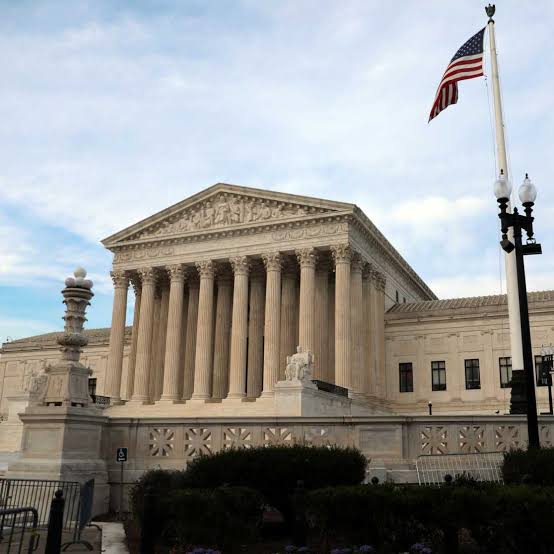

AMERICA DIVIDED AS SUPREME COURT UPHOLDS BIRTHRIGHT CITIZENSHIP
By PHC Telegraph
The United States has once again found itself at the centre of an intense national debate after the U.S. Supreme Court reaffirmed the constitutional principle that children born on American soil are citizens of the United States, regardless of the immigration status of their parents.
The landmark decision, rooted in the Citizenship Clause of the Fourteenth Amendment to the U.S. Constitution, preserves a legal doctrine that has shaped American society for more than a century. While immigrant-rights advocates, constitutional scholars and civil liberties organisations welcomed the ruling as a victory for the Constitution, critics argued that it could complicate efforts to tighten immigration controls.
The judgment effectively blocks attempts to deny automatic citizenship to children born in the United States to undocumented immigrants, reaffirming a principle that traces its modern legal foundation to the Supreme Court’s 1898 decision in United States v. Wong Kim Ark.
Across America, reactions reflected the country’s deep political divide.
Supporters described the ruling as a reaffirmation of constitutional protections and the rule of law. Immigration advocates said the decision provides certainty for millions of families while preventing the creation of a generation of children whose legal status could have been thrown into question.
Many constitutional experts argued that the Fourteenth Amendment was deliberately written to guarantee citizenship to virtually everyone born within the territorial jurisdiction of the United States. They maintained that altering such a fundamental constitutional principle cannot be achieved through executive action alone.
Civil rights organisations also hailed the judgment as a victory against discrimination, insisting that citizenship should not depend on the nationality or immigration status of one’s parents.
However, conservative immigration advocates expressed disappointment, arguing that birthright citizenship has encouraged illegal immigration and what they describe as “birth tourism,” in which foreign nationals travel to the United States to give birth so their children automatically acquire American citizenship.
Supporters of tighter immigration policies contend that the Constitution’s phrase, “subject to the jurisdiction thereof,” should be interpreted more narrowly than it has been for decades. Although that argument has attracted some legal support, it has repeatedly failed to persuade the courts.
The decision is expected to become another major issue in America’s already heated political landscape. Democrats are likely to present the judgment as evidence that constitutional safeguards remain intact, while Republicans favouring stricter immigration controls are expected to renew calls for legislative reforms and broader changes to immigration policy.
Beyond politics, the ruling carries practical implications for millions of immigrant families who now have renewed legal certainty that children born in the United States remain entitled to American citizenship under existing constitutional protections.

The impact of the decision extends beyond America’s borders.
For Nigerians and other African immigrants living in the United States, the ruling provides reassurance that long-established citizenship rights remain protected. Thousands of Nigerian families have children born in the United States, making the decision one with direct significance for communities both in America and back home.
Legal analysts say the judgment also reinforces the principle that constitutional rights cannot easily be altered by executive action, underscoring the enduring role of the judiciary as an independent interpreter of the Constitution.
Although the political arguments over immigration are unlikely to disappear, the Supreme Court’s decision has reaffirmed one of the oldest and most enduring principles of American constitutional law—that birth on U.S. soil remains the gateway to American citizenship.
As the debate shifts from the courtroom back to the political arena, one thing is certain: the issue of immigration will remain one of the defining questions shaping America’s future, with consequences that will be watched closely across the world.