
WHY WALL STREET IS BETTING ON DANGOTE
By PHC Telegraph
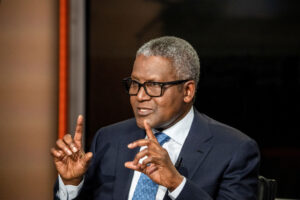 Alike Dangote
There is a new buzz around Nigerian business circles. From Lagos to London and from investment banks in New York to fund managers in Europe, the name on many investors’ lips is the same: Dangote.
The immediate trigger is the successful $750 million Eurobond issued by Dangote Fertiliser, one of the flagship companies in the Dangote Group. But behind the headlines lies a much bigger story—one that speaks to changing perceptions of Nigerian business, Africa’s industrial future and the growing confidence of international investors in companies capable of competing on the global stage.
For many Nigerians, the first question has been simple: What exactly is a Eurobond, and why is everyone talking about it?
The answer is that a Eurobond is a debt instrument sold to international investors, usually in United States dollars. Rather than borrowing from local banks, a company raises money from pension funds, insurance companies, investment banks and institutional investors across the world. In return, the company agrees to pay interest over an agreed period before repaying the principal at maturity.
Unlike a public offer that is designed for retail investors, Dangote’s transaction was structured primarily for institutional and qualified investors. Reports indicate that participation required a substantial minimum investment, putting it beyond the reach of most individual investors.
More Than Raising Money
Financial analysts say the bond is not merely about borrowing funds.
It is part of a broader strategy by the Dangote Group to reposition its businesses as global industrial enterprises with access to international capital markets.
For years, Nigerian companies have depended heavily on commercial bank loans, often at relatively high interest rates. Accessing global debt markets gives large corporations an opportunity to diversify their funding sources, refinance existing obligations and obtain longer-term capital that supports expansion.
Dangote Fertiliser’s ability to attract strong investor demand suggests that global markets increasingly view the company as a credible industrial player with sustainable earnings.
Why Investors Are Buying
Several factors appear to explain the enthusiasm.
The Dangote Fertiliser plant is among the world’s largest urea production facilities and exports significant volumes to international markets. Those exports generate foreign exchange revenues, reducing some of the risks associated with businesses that rely solely on the domestic economy.
Investors are also looking beyond today’s balance sheet.
They are investing in a company that forms part of an industrial ecosystem spanning cement, fertiliser, petrochemicals, logistics and refining. That integration gives the group considerable scale and resilience compared with many companies operating in emerging markets.
Perhaps even more importantly, Dangote has earned a reputation for executing projects that many initially dismissed as impossible.
The Lekki refinery, despite years of delays, has entered production. The fertiliser plant has become a major exporter. The cement business remains one of Africa’s largest manufacturing success stories.
For international investors, that record matters.
Beyond Dangote
The implications extend well beyond one company.
Successful access to international capital markets sends an important signal about Nigeria’s corporate sector. It demonstrates that global investors are prepared to distinguish between the challenges facing a country’s economy and the strength of individual businesses operating within it.
That distinction matters.
Nigeria continues to contend with inflationary pressures, exchange-rate volatility, infrastructure deficits and security concerns. Yet investors appear willing to support companies with strong governance, export earnings and competitive advantages.
For other large Nigerian corporations, the Dangote transaction may provide a roadmap for future international fundraising.
A Vote of Confidence
The Eurobond also reflects confidence in Africa’s industrial potential.
Global demand for fertiliser continues to grow as countries seek to improve food security and agricultural productivity. Africa, with its expanding population and increasing agricultural investments, represents one of the world’s most promising long-term markets.
Dangote Fertiliser occupies a strategic position within that market.
Its location allows exports across Africa, Europe, Latin America and other destinations, giving the company access to diversified revenue streams.
Challenges Remain
Despite the optimism, analysts caution that international borrowing also carries obligations.
Interest payments must be met on schedule, operational performance must remain strong and currency risks require careful management. Any deterioration in market conditions or business performance could increase financing pressures.
Investors will therefore continue to monitor production volumes, export earnings and broader economic conditions in Nigeria.
The Bigger Picture
Ultimately, the excitement surrounding the Eurobond is about more than Dangote.
It is about the emergence of Nigerian companies that increasingly see themselves not simply as local businesses but as global industrial competitors.
It is also about international investors who are beginning to look beyond stereotypes associated with Africa and instead assess companies on their commercial fundamentals.
For Nigeria, that could be one of the most important developments of all.
Each successful international fundraising exercise strengthens the country’s corporate reputation, deepens confidence in its private sector and demonstrates that Nigerian enterprise can compete for global capital on merit.
Wall Street’s growing interest in Dangote is therefore more than an endorsement of one businessman.
It is a reminder that when Nigerian companies build world-class assets, generate sustainable export earnings and deliver on their promises, international capital is prepared to follow.
And that may prove to be one of the country’s most valuable exports in the years ahead.