



Tinubu’s Unyielding Stance Over Tax Reforms
● Insists taxation bills should run their full course in Parliament despite the advice of the National Economic Council

By PHC Telegraph
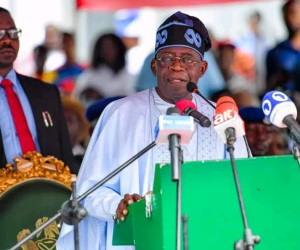
The stage may have been set for a stiff battle between the Federal Government which is pushing for tax reforms and subregional governments led by the 19 Northern states.
The National Economic Council, NEC, had at its 144th meeting decided to ask Tinubu to withdraw four bills relating to the subject which are currently receiving attention at the National Assembly.
The bills include the Nigeria Tax Bill 2024, which is to provide the fiscal framework for taxation in the country.
And the Tax Administration Bill that is expected to provide a legal framework for all taxes in the country.
But the intent of the bills which are part of the economic restructuring that is taking place in the country is generating serious controversy.
Subregional groups, driven by interests – social, economic, cultural and religious – are opposed to the passage of the said bills.
The 19 Northern states that want nothing to do with the taxation bill insist that the way it is structured, its outcome would pose a major threat to their interest.
Governors from the three geopolitical zones in the North who met in Kaduna on Monday, with prominent traditional rulers from the region decided to fire the first shot.
They resolved, according to the Daily Trust newspaper to reject the Nigeria Tax Reform Bill.
A communiqué issued at the end of the meeting revealed that the northern governors and their monarchs are not comfortable with the contents of the recent Tax Reform Bill.
They said categorically that the interests of the North would be adversely affected especially by the proposed amendment to the distribution of the Value Added Tax (VAT).
Over the years, there have been arguments suggesting that those who collect more VAT should have more of the returns from it.
Most of the VAT collected in the South for example comes from the sale of alchoholic bevearages. These products are barred in the North, perhaps on religious grounds.
But economic experts say when it comes to sharing the booty, the North unperturbed by the source of the distributive funds, collects what is viewed as its fair share through a system that is allegedly skewed in their favour.

This would mean that apart from religious and cultural considerations on matters like this, the real bone of contention is purely economic.

Against the background of disagreements over the tax issue, the National Economic Council presided over by Vice President Kashim Shettima approached the President to withdraw the taxation bills.
The President has however refused to back down.
Thanking the National Economic Council for its recommendation, Tinubu asked that the bills be allowed to run their full course on the floor of Parliament.
He said that inputs which may neccesitate the modification of the taxation bill could still be accommodated, saying that a deliberate “engagement with key stakeholders to address any reservations” they have “about the bills” would necessary “while the National Assembly considers them for passage.”
How the sub-nationals that are opposing the tax reform would react to the President’s refusal to withdraw the bill is not yet known.
Bent on creating a trillion-dollar national economy, the Presidency which is open to flexibility on the issue and which would want all the sides to show some flexibility reckons that this would be the appropriate route to travel.
Will Tinubu be able to build a broad coalition which will ensure that the tax reform is passed?
Will the bill be defeated on the floor if the President still refuses to bulge?
Only time will tell.