

Developing Story: Judiciary, Politics Collide As Rivers Crisis Shifts To Courtroom
By PHC Telegraph

Hearing in the matter brought before Justice Florence Fiberesima by the Rivers State Governor, Siminalayi Fubara and his Deputy, Professor Ngozi Odu will commence today, Friday 23rd January, 2026.
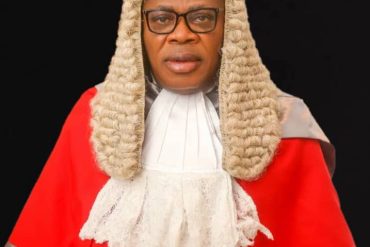
The court had issued an interim order preventing the Chief Judge, Justice Simon Amadi from going ahead with the setting up of a 7-man panel to probe acts of gross misconduct levied against the governor and his deputy.
Today, lawyers would put out arguments which would be expected to sway the opinion of the court one way or the other.

The Rivers House of Assembly had relied on the seven-day constitutional window provided under Section 188 of the 1999 Constitution (as amended) to press forward with impeachment proceedings, following the service of allegations against Governor Fubara.
However, legal analysts say the existence of pending suits and restraining orders effectively froze the process, leaving the Chief Judge with little room to manoeuvre without risking contempt of court.
“Once a matter is before a court, public officials are expected to preserve the status quo,” a senior constitutional lawyer in Port Harcourt told this newspaper. “Constituting a panel under these circumstances would almost certainly have collapsed under judicial review.”

Setback for Lawmakers
The Chief Judge’s stance represents a procedural setback for the Assembly, which cannot lawfully proceed with impeachment without the constitution of a panel. While lawmakers retain their constitutional authority, the momentum that once appeared decisive has now slowed considerably.
Political observers note that the Assembly’s strategy appeared designed to outrun judicial intervention, a tactic that has failed in similar political disputes across the country.

Political Undercurrents
The development also reshaped the optics of recent political mobilisation. Supporters of the Minister of the Federal Capital Territory, Nyesom Wike, drawn largely from Ikwerre Local Government Area, had earlier visited the Speaker of the Assembly in a show of solidarity — a move widely interpreted as an attempt to reinforce legislative resolve.
That visit has now been overtaken by events.
“The reality is that political pressure cannot substitute for judicial clearance,” a former Rivers State lawmaker said. “The courts have stepped into the driver’s seat.”
Relief, Not Resolution
While the Chief Judge’s decision has lowered political temperature and reduced uncertainty, analysts caution that it does not end the Rivers crisis.
Governor Fubara gains breathing space, but the substantive legal questions surrounding executive-legislative relations in the state remain unresolved. Much now hinges on the outcome of proceedings.
Implications Beyond Rivers
Nationally, the episode reinforces a growing pattern in Nigerian politics where courts increasingly dictate the tempo of power struggles, from party leadership disputes to impeachment battles.
For Rivers State, the message is clear: impeachment is a constitutional process, not a political sprint.
What Next
As the legal battle moves to the courtroom, political actors on all sides are expected to recalibrate. Whether this pause leads to dialogue, further litigation, or renewed confrontation will determine if Rivers has merely delayed a reckoning — or quietly begun to step away from it.