


A NEW SHERIFF AT LOUIS EDET
Disu Takes Charge as Police Seek Reset

By PHC Telegraph
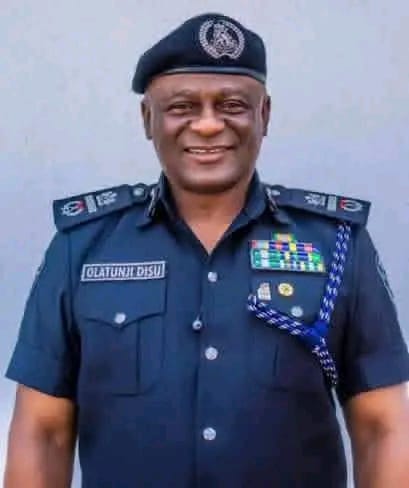
A new chapter has opened in the leadership of the Nigeria Police Force following the appointment of Tunji Disu as Inspector-General of Police. His emergence comes after President Bola Tinubu removed Kayode Egbetokun, ending months of public controversy over tenure extension and legality.
The transition has been interpreted in many quarters as both a political and institutional reset — a moment to steady morale within the force and recalibrate public confidence in policing.
A Career Officer Rises
Disu is no outsider. A career policeman with more than three decades of service, he has risen through the ranks in a force often criticised for favouring patronage over professionalism.
Born in Lagos, Disu holds a degree from Lagos State University, along with advanced academic qualifications in public administration and criminology. His training record includes local and international courses in intelligence, investigation, and strategic leadership — credentials that have shaped his reputation as an operational officer rather than a ceremonial one.
His résumé reflects postings in some of the country’s most politically sensitive and crime-prone environments. He once commanded the Rapid Response Squad in Lagos, later led the Intelligence Response Team, and served as Commissioner of Police in Rivers State and the Federal Capital Territory. Before his elevation, he headed the Force Criminal Investigation Department Annex in Lagos as an Assistant Inspector-General.
Colleagues describe him as methodical and media-aware, with a leaning toward intelligence-driven operations. Supporters argue that his background signals continuity in operational policing, but with stronger emphasis on investigative depth.
The Shadow of Controversy
Disu’s appointment follows a period of turbulence under his predecessor. Critics, including activist Omoyele Sowore, had repeatedly questioned the legality of Egbetokun’s extended stay in office after reaching retirement thresholds. Though the government defended the extension under amended legal provisions, the debate created visible tension within sections of the force and among civil society groups.

For some officers, the change in leadership quietly closes what they saw as a distracting and morale-draining chapter. For others, it introduces uncertainty — a natural consequence whenever command structures shift at the highest level.
Mood Within the Ranks
Interviews with officers across commands suggest a mood best described as cautious optimism.
Senior officers view Disu as “one of us” — a product of the system who understands its limitations and pressures. Younger officers, particularly those in tactical and investigative units, hope his operational pedigree will translate into better equipment, clearer directives, and less political exposure in frontline policing.

There is also relief in some quarters that the public controversy surrounding tenure legality has subsided. Stability at the top often filters down as clarity in postings, promotions, and command discipline.
Still, challenges remain. The force continues to grapple with funding constraints, welfare complaints, public distrust, and calls for deeper reform. Leadership alone cannot resolve these structural issues, but tone and direction matter.
What to Expect Under Disu
Three likely themes may define Disu’s tenure:
1. Intelligence-Led Policing:
Given his background, analysts expect greater emphasis on intelligence gathering, coordinated operations, and technology-enabled investigations.
2. Institutional Discipline:
Observers believe he may prioritise internal order and chain-of-command clarity, particularly after months of political debate that risked distracting operational focus.
3. Public Image Management:
With policing under intense scrutiny, Disu is likely to balance enforcement with strategic communication, aiming to rebuild trust without appearing weak on security.
Whether these expectations materialise will depend on political backing, resource allocation, and his willingness to confront entrenched institutional habits.
A Defining Moment
Disu assumes office at a time when Nigerians demand both security and accountability. Kidnapping, organised crime, communal violence, and cyber-crime remain pressing threats. Simultaneously, public patience for misconduct within the ranks is thin.
His challenge is therefore dual: strengthen enforcement capacity while reforming culture. Success would stabilise the institution and reinforce public confidence. Failure would deepen scepticism about whether leadership changes truly signal systemic reform.
For now, the Nigeria Police Force watches — hopeful, measured, and aware that leadership transitions often reveal as much about institutions as about the men who lead them.