


APC’s Early Consolidation Strategy, How Ahmed Tinubu Is Consolidating Raw Power
By PHC Telegraph

It is the last day of the National Convention of the All Progressives Congress, APC, which has for days occupied national centre stage.
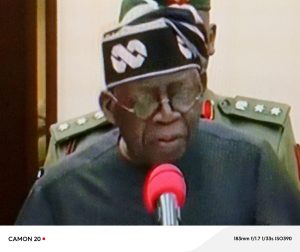
Delegates – more than 8000 persons who in the past few days have swarmed Abuja – would participate in the affirmation of the nomination of the party’s presidential flag bearer, President Bola, Ahmed Tinubu.
Also to be elected as the convention winds down are members of the National Executive Committee of the party.
 1-4608×3466-1-0#
Somehow, it is the first time in the party’s political history that such an elective convention would hold this early, a move which not only marks a contrasting departure from a recent past, but also suggests that the party under the current dispensation is desirous to hit the ground running.
On the road to the convention, the APC had demonstrated enormous strength, benefitting from massive defections of political heavyweights including state governors.
More than 30 governors seeking to align their states with the Federal Government have converged under its banner. Among them, are all the governors of the South South including Governor of Rivers State, Siminalayi Fubara.
The opposition, uncomfortable with the strides apparently being made in the field by the APC express serious fears about the evolution of a one-party state. Supporters on the other hand insist it is not really the fault of the APC that it has become the popular destination of choice for most Nigerians searching for a political party to belong.
President Bola Tinubu has persistently noted that the APC does not owe anyone any apology as a, result of the influx of many Nigerians into its fold.
The signs indicate that APC candidates, including the presidential flag bearer would emerge by broad consensus as the party attempts to reposition itself in readiness for the 2027 general elections.
The Strategy Of Early Consolidation
An early show of support for Tinubu, insiders disclose, offers the APC several strategic advantages. It reduces the likelihood of internal fractures, allowing the party to speak with one voice.
More importantly, it also positions the APC ahead of its rivals, many of whom remain largely entangled in internal realignments and leadership questions.
By moving early—and anchoring that momentum around a clearly scheduled convention—the party has effectively “shifted the political conversation from uncertainty to inevitability”, a notable public analyst said in Port Harcourt
The Weight of Governance

“Yet, the effort to consolidate power does not occur in a vacuum”, Telegraph’s Editor- in-Chief Ogbonna Nwuke observes, “The Tinubu administration has undertaken reforms that are as consequential as they are controversial. Economic adjustments, including subsidy removal and currency realignments, have imposed real costs on citizens.”

The convention which ends today has doubled as a platform of reassurance. It is an attempt to frame present difficulties as the price of future stability—a message that will be tested not in the convention hall, but in the everyday realities of Nigerians.
Unity or Uniformity?
A consensus-driven approach may deliver short-term cohesion, but it raises longer-term questions. Does the absence of visible dissent strengthen the party, or does it suppress necessary debate?
Political history suggests that while unity is desirable, it is often the management of disagreement—not its absence—that sustains enduring institutions.
Yet, as the APC delegates prepare for a long night at Eagle Square; get ready to say goodbye to new friends and the federal capital territory – symbol of Nigeria’s evolving greatness; the memories of a colourful convention would linger not just in the minds of those who openly participated but also in the hearts of countless observers who watched from the sidelines.