



Torrent Of Resignations: How Wike’s Core Men Are Turning Their Back On Fubara

● Political appointess shun govt positions
● As the isolation of the administration begins;
● And Rivers people watch from the sidelines
By PHC Telegraph
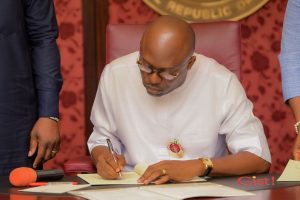 Governor Siminalayi Fubara, leading a war cabinet against his former boss.
The administration of Siminalayi Fubara, Governor of Rivers State, has been hit by an avalange of high level resignations as the political stage shakes and the tables turn.
No less than eight commissioners and SAs serving in the Government have dropped their official pens, dragged their bags from around the corner and walked out of the administration which is taking severe knocks as officials led by the state governor respond to external stimuli.
Gift Worlu, Commissioner for Housing, and Austen Ben-Chioma are the latest to give up their appointments. News of their systematic resignation from the Fubara government broke today.
The list of political appointees who have already thrown in the towel is becoming endless. They include Professor Mmom (Education), Engineer Emeka Woke (Special Duties) and Prof. Zacheaus Adaongor (Justice)
Others are Dax George Kelly Alabo (Works), Jacobson Nbina (Agriculture), Nwafor Uchechuku, Charles Amadi, Barrister Inime Aguma and Isaac Kamalu (Finance)
The torrent of unexpected resignations that is being recorded is perhaps, an indication that the crisis between pro-Wike groups and anti-Wike elements is really getting hotter.
Game of Structures; Why Men Are Turning Their Backs Against The Sim Administration:
 The Minister of the Federal Capital Territory, Nyesom Wike up in arms against those who wish to destroy his political structure.
Since the mass exodus of Commissioners under the Alfred Diete-Spiff administration in the 70s, there has never been anything like it until the birth of the Sim era.
Sim supporters have been alleging Wike imposed some of his people on an unwilling technocrat from Opobo who worked closely with him or pretended to work closely with him until he bared his fangs.
The trend which has left watchers of the Rivers political scene gasping for breathe suggests that Siminalayi who is currently embroiled in a battle with his political mentor substantially has not developed a sustainable political structure.
In the Rivers State House of Assembly which is passing through a trying phase, Wike has 26 lawmakers while Sim now has five, courtesy of the return of Linda Somiari who beat a hasty retreat after colleagues sided with the APC.
This may probably mean that the State Government’s propaganda machine, as it is at this time, is failing awfully in winning the psychological war, in astutely dividing the Wike camp, and influencing mass opinion which should ordinarily give Sim the desired edge in the fight against a ‘mangrove giant’ that appears deep-rooted.
But those who are busy creating the impression that Wike has no dependable structure must be wondering if they were right in their analysis in the first place.
They may be wondering where they went wrong in their calculation that the political structure which currently exists in the State, which has driven the Rivers PDP to great heights in the last 10 years, belongs to someone else.
Given what is playing out on the surface, the massive exit of political appointees from the Sim administration point in the direction of an evolving pattern of political isolation.
If the trend that observers are presently following persists, there may be reason to think that the government is facing a wave of serious isolation from active members of the Rivers political class.
Again, if what is playing out on centrestage is anything to go by, then Nyesom Wike who is fighting to preserve his structure may indeed have succeeded over the years in building a resilient political family in and outside the State that is capable of attacking perceived enemies and defending its core positions.
From the look of things, Telegraph sources reckon that the Wike team appears for now to be tactically ahead in terms of agenda setting when compared to the Fubara group.
At the centre of the crisis are interests, not necessarily the love for Rivers State which members of the political class are peddling in the public space.
In the meantime, Rivers people watch from the sidelines as their politically exposed sons and daughters fight in the open for relevance, opportunities and power.
Opinions are sharply divided as the war escalates and spin doctors take their place on centrestage.
The Port Harcourt Telegraph has earlier predicted that the forthcoming elections at the Local Government level would be one of the most fiercely fought in the history of the State.
Nothing in the Rivers political firmament as dark clouds gather below has changed the possibility of this happening.
Recall that the Telegraph has reported days ago while covering the changing tide of Rivers politics that history is just about to repeat.
When five PDP governors, including a Governor of Rivers State stormed out of the PDP to join a coalition which founded the APC , they were making history.
But when five governors in the PDP, including a Rivers Governor who is now the Minister of the Federal Capital Territory, formed the G5 and stayed in their party to fight the presidential candidate, it was history staging a comeback.
Nyesom Wike is on the verge of dumping the PDP predictably for the APC. He will not be the first Rivers Governor to do so. Rotimi Amaechi was the first Rivers Governor to exit the PDP and join the APC to confront his former party as he prepared to leave office.
Wike whose exit will mark a repeat of history as the elements take up a vibration of their own in these times may find himself walking a path that may have been pre-destined by nature
Somehow, not many are willing to learn urgent lessons from history. Neither are they able to connect the dots, which if carefully studied may open man’s eyes. What lessons will history teach this time after Fubara and Wike meet in the battlefield?
How Repetitive Dates, Numbers, Play A Role In Shaping Nigeria’s Political History:
Nigeria which gained independence from the British in 1960 has gone through varying political phases, emerging as a fledgling democracy after many false starts.
The style of democratic rule adopted after freedom was gained was patterned after the Westminster format also known as the parliamentary system.
Shortly after the transition from colonial to self rule, a bloody coup planned by the five majors. Their intervention in 1966 resulted in a costly civil war, but it was not until 1970 that it ended.
The experience arising from the conflict of the political class and their backers which created room for the Biafra war led to the institution of military rule.
In 1976, the Gowon Administration was thrown out and in 1979, Nigeria attempted a return to civil rule. The march to democracy did not last. It crumbled in 1983 after the army kicked out President Shehu Shagari and his co-travellers.
Another Attempt was made in 1989, precisely 10 years after. It was toppled in 1993, following the outright rejection of Chief Moshood Abiola’s victory by the Nigerian military.
In 1999, Nigeria staged a comeback on the road to democracy. Thus far, the system has remained in force with civilian power changing hands down the road.