

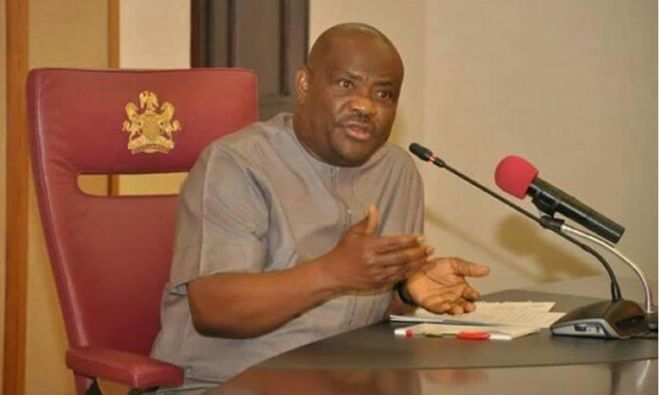

Is it possible that there is a resolve by some powerful politicians in Rivers State to obliterate zoning? That is the question many in Rivers State are asking even as tales of the existence of a supposed agenda of the Ikwerre make the rounds.

No one has been able to answer that question. So, the suspicion that a particular ethnic group may be planning to hijack power to the detriment of other groups is gradually growing. This may thus, turn out to be a major issue on the road to 2023.
Although the issue of power rotation has been on the front burner since 2015, the recent position taken by Governor Nyesom Wike which now suggests that only men capable of “boxing it out” may fulfill their dream to serve the people in public office is seemingly raising eyebrows in certain quarters.
The All Progressives Congress has remained glued to the idea of power rotation since 2015, insisting that such an arrangement would engender ethnic harmony, promote even representation and give the people a sense of belonging.
Wike who passively touched on the issue at a public gathering may not have thought deeply about his comments, but critics say the governor’s words may have been carefully weaved to convey a deeper meaning than many thought.
“We are not confused by his choice of words”, an experienced politician remarked, “ Wike is drifting away from the principle of zoning; what we know as ‘turn by turn’; and he can’t be allowed to have his way. He knows like we know that the bulk of the votes cast are in his part of the State. So, his allusion to capacity, to a box-it-out-situation is a message that we understand.”
Another community leader who says he has sympathy for the PDP expressed dissatisfaction, saying the governor should take the blame if the State implodes.
“This people have become too greedy. They think that we are all fools, think that power truly belongs to them to use as they like. How can the governor say publicly that those who want to aim at public office should be ready to box it out? It is an open invitation to violence and the Governor shouldn’t have said that”, he argued.
In many circles, especially in the Upland which enjoys an overbearing voting advantage, the Governor appears to have strengthened the resolve of would be aspirants from this power bloc which has been in power since the return of democratic rule in 1999 to go for it.
Nowhere is the resolve to hold on to power strongest than in Port Harcourt, Obio/Akpor, Emohua and Ikwerre Local Government Areas, where at least half of the total votes in the entire State are warehoused.
Despite occupying Brick House back to back in the last 12 years, the ethnic Ikwerres in the PDP still have an appetite to remain in office. This may explain why Sir Austin Opara’s attempt to run for the governorship is picking up momentum.
But there are growing concerns that the Ijaws may not accept the idea of another Upland candidate. Since the birth of the new Rivers State, they have not tasted power at the highest level.
Without a bag of votes to fall back on, the Ijaws in Rivers State are likely to be reduced to what late Governor Bola Ige described as ‘siddon day look’ if power rotation is sidelined.
In a sense Wike’s position that those who are interested in the governorship should “box it out” may not conform with the dream of the State’s founding fathers who prescribed the notion of what has come to be known as the “turn by turn” approach to power sharing.
Wike may be considered a hero outside the boundaries of Rivers State, especially for saying he would not be part of the selection of his successor, but there are persons within the boundaries of the Rivers State who are trying to analyze his comments to the last letter.