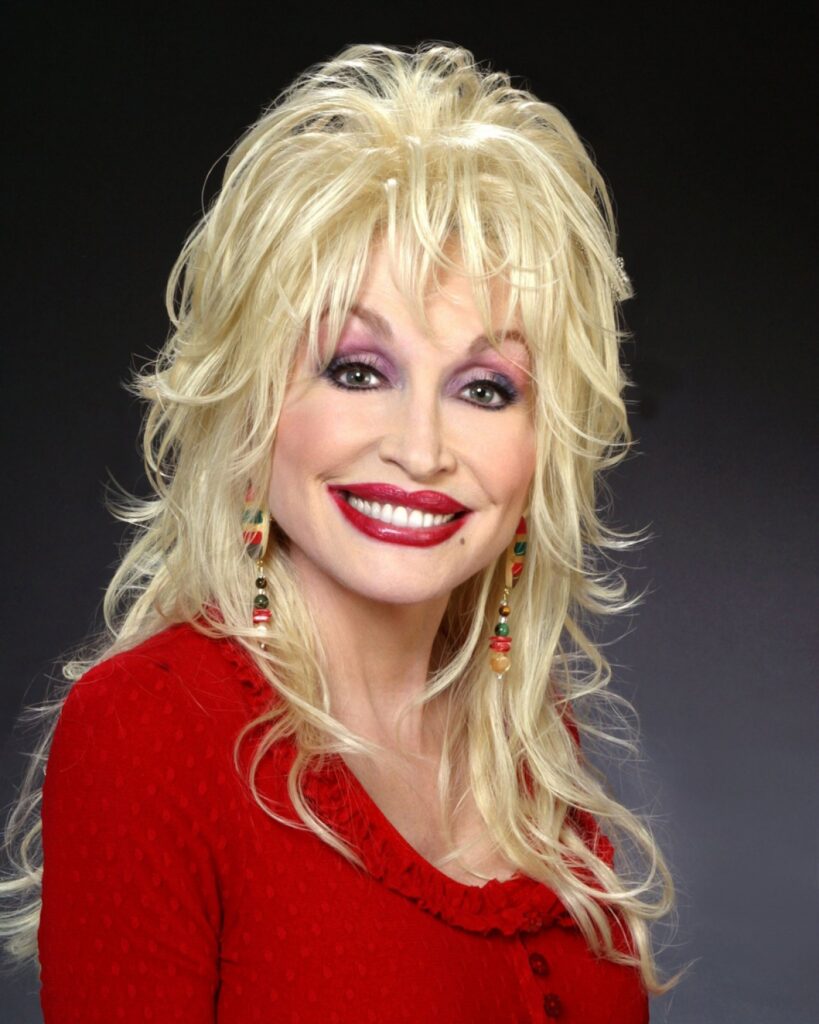


• America lowers flags as Nashville remembers its greatest daughter
• Music lovers across continents celebrate woman behind Jolene, 9 to 5 and I Will Always Love You
By PHC Telegraph
The flags are flying at half-staff across the United States. Flowers and candles are piling up in Nashville. And around the world, millions of music lovers are reaching once again for the unforgettable songs of Dolly Parton.
The Queen of Country Music is dead.
But everywhere Wednesday, it seemed Dolly was still singing. Parton, the dazzling singer, songwriter, actress, businesswoman and philanthropist whose extraordinary career spanned nearly seven decades, died Tuesday at the age of 80 after a brief battle with cancer. She passed away in Nashville surrounded by loved ones.
Her death has triggered an extraordinary outpouring of grief stretching far beyond the country music community that first embraced the poor girl from the mountains of Tennessee.
From Nashville to New York, London and beyond, singers, actors, political leaders and ordinary fans are remembering a woman whose unmistakable voice, towering blonde hair, sparkling costumes and infectious humour made her one of the most recognisable entertainers of modern times.
President Donald Trump has ordered American flags lowered to half-staff for a week in tribute to Parton. Under the presidential proclamation, flags are to remain lowered at the White House, federal buildings, military installations, naval vessels and United States diplomatic missions around the world until sunset on September 1.
In Nashville, the spiritual home of country music and the city where Parton built much of her career, fans gathered to mourn.
Flowers, candles and personal messages appeared around her star on the Music City Walk of Fame as admirers came together to remember the woman Nashville proudly called its own.
Yet Dolly Parton belonged to far more than Nashville. She belonged to generations. For older listeners, she was the young Appalachian woman who turned poverty, family, heartbreak and hope into songs.
For another generation, she was the irresistible voice behind Jolene, the woman who sang I Will Always Love You, and the irrepressible office worker of the film and anthem 9 to 5.
For younger fans, she became something else — proof that an entertainer could remain relevant without surrendering authenticity.
Her songs crossed musical boundaries. Her films carried her personality onto the big screen. Her wit made television audiences laugh. And her philanthropy introduced another Dolly: the woman who quietly used a considerable fortune to put books into the hands of children.
Over the course of her career, Parton sold more than 100 million records, won 11 Grammy Awards and wrote thousands of songs. She was inducted into the Country Music Hall of Fame and, decades later, the Rock & Roll Hall of Fame.
Hollywood also embraced her. Her performance alongside Jane Fonda and Lily Tomlin in 9 to 5 helped establish her as a credible film actress rather than merely a singer trying her hand at movies.
But perhaps her greatest achievement was that audiences rarely separated the superstar from the woman.
Dolly laughed at herself before anyone else could. She talked openly about her appearance, her wigs, her clothes and the artificial extravagance of the public image she had deliberately constructed.
Behind all the glitter, however, was a formidable songwriter and businesswoman who understood ownership, publishing and the value of her work at a time when women in the entertainment industry often surrendered control.
Then there was I Will Always Love You. Parton wrote the song decades before Whitney Houston turned it into one of the biggest recordings in popular music history.
Its journey from a country farewell song to a global pop standard demonstrated the extraordinary reach of Parton’s songwriting.

Yet perhaps Coat of Many Colors came closest to explaining Dolly herself. The song drew on the poverty of her Tennessee childhood and transformed deprivation into dignity, family love and pride.
That ability — to find something universal in deeply personal experiences — lay at the heart of her appeal.
Outside music, her Imagination Library became one of the world’s best-known childhood literacy programmes, distributing hundreds of millions of books to children. Her charitable giving also extended to disaster relief and medical research.
Now the tributes are pouring in.
Country stars who followed the path she helped clear are remembering their mentor. Pop stars are acknowledging her influence. Actors are recalling her warmth. Political figures from different ideological camps are paying tribute to a woman who managed, remarkably, to remain loved across America’s increasingly bitter political divide.
And ordinary people are doing what perhaps matters most. They are playing her records. Somewhere, Jolene is playing. Somewhere else, someone is singing along to 9 to 5.
And across different continents, another listener is hearing I Will Always Love You and remembering a romance, a departure, a marriage, a funeral or simply another time.
That may ultimately be Dolly Parton’s greatest monument. Not the awards. Not the glitter. Not even the star in Nashville. It is the extraordinary catalogue of songs that became attached to people’s lives.
Dolly Parton once described her songs as her legacy. At 80, the voice has fallen silent. The songs have not.