


FCT Council Polls: Movement Curbs, PDP Rift and the Wike Question
By PHC Telegraph
 Nyesom Wike
Residents of the Federal Capital Territory (FCT) head to the polls tomorrow in what many observers describe as a defining political moment — not just for the six area councils, but for the influence of the FCT Minister, Nyesom Wike.
Security agencies have announced movement restrictions across Abuja during voting hours, a development that has generated debate. Senator Ireti Kingibe earlier expressed concern, noting that the capital had rarely experienced such measures during council elections. Authorities insist the restrictions are purely security-driven and aimed at ensuring orderly voting.
Beyond logistics, the election has taken on broader political significance. Wike, a former Rivers State governor now serving as FCT Minister, has publicly backed candidates aligned with the ruling All Progressives Congress (APC), declaring that opponents of President Bola Ahmed Tinubu would struggle to win in the territory.
The contest has been complicated by the last-minute withdrawal of several candidates of the opposition People’s Democratic Party (PDP) in key councils, with some openly backing APC contenders.
The PDP’s national leadership has distanced itself from those decisions, describing them as inconsistent with party directives. The episode has deepened perceptions of internal divisions within the party.
Political analysts say the immediate impact could favour the APC in competitive councils such as Abuja Municipal (AMAC) and Bwari, though turnout levels may ultimately determine the scale of advantage.
Civil society groups have also warned that voter apathy — long a feature of local government polls — could shape the final outcome more than elite endorsements.

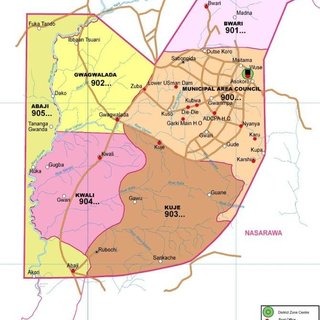
At stake is not only control of grassroots administration across AMAC, Bwari, Gwagwalada, Kuje, Abaji and Kwali, but also the broader question of whether Wike’s political weight and infrastructure-driven messaging can decisively influence the capital’s electorate.
Critics argue that Abuja’s political dynamics differ sharply from Rivers State, where Wike built his reputation as a combative political tacticianSupporters counter that recent infrastructure projects in the capital have strengthened his standing among residents.
As voters prepare to cast their ballots, tomorrow’s election may serve as an early barometer of local sentiment — and a test of how much sway the FCT Minister truly commands in Nigeria’s capital.