

Ethnicity, geography shape Rivers governorship race as parties unveil running mates
By PHC Telegraph
The battle for Brick House is gradually taking shape, and if the choices made by the major political parties are any indication, the 2027 Rivers governorship election will be fought not only on issues of governance but also on the delicate arithmetic of ethnicity, geography and political alliances.
With the primaries concluded and attention shifting to the selection of running mates, the state’s leading political parties are carefully assembling tickets designed to appeal to Rivers’ diverse ethnic and senatorial interests. The emerging combinations suggest that no serious contender is prepared to ignore the long-established political convention of balancing the upland and riverine divide while ensuring broad regional representation.
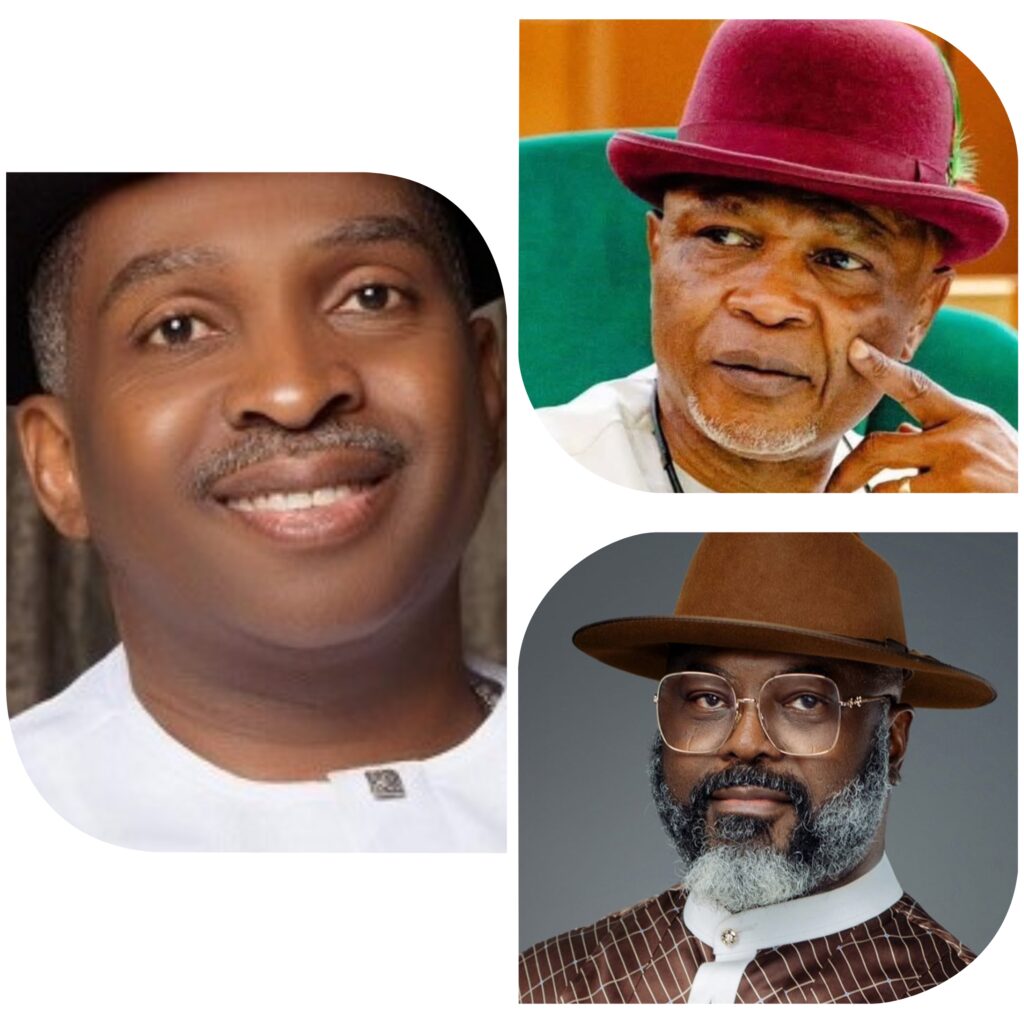
Already, the National Democratic Congress (NDC) has produced businessman Dumo Lulu-Briggs, a Kalabari from Rivers West Senatorial District, as its governorship candidate. To strengthen the ticket, the party has reportedly settled for Dr. Mike Nwilagha, an Ogoni from the Rivers South-East Senatorial District, thereby combining a riverine candidate with an upland running mate.
The African Democratic Congress (ADC) has taken a slightly different route. Its governorship candidate, Dr. Gabriel Pidomson, hails from Gokana in Ogoniland, while his running mate, David Okumgba, comes from Okrika in Rivers East Senatorial District. The pairing equally reflects an effort to bridge the upland-riverine divide while extending the ticket’s appeal across ethnic and regional lines.
For the Ogoni people, the emergence of Dr. Pidomson as a frontline governorship candidate represents another chapter in a long quest for the state’s highest office.
From the days of Kente Giadom during the Second Republic to the repeated governorship aspirations of Senator Magnus Abe under the APC and later the SDP, Ogoni political leaders have sought, without success, to break what many describe as a historic political ceiling.
Today, the community finds itself in an unprecedented position. One of its sons heads a major governorship ticket, while another occupies the deputy governorship slot on a rival platform. Whatever the outcome of the election, few doubt that Ogoni politics will occupy a more prominent place in Rivers’ political calculations.
The candidate widely regarded by many observers as the man to beat remains Kingsley Ogundu Chinda of the APC, backed by the influential Rainbow Coalition.
A seasoned federal lawmaker from Obio/Akpor in Rivers East Senatorial District, Chinda has yet to formally announce his running mate. That decision is now one of the most closely watched developments in the state’s political landscape.
Although no official confirmation has been made, political circles continue to speculate that the APC may eventually settle for a riverine deputy governorship candidate, with some mentioning outgoing House of Assembly leader Major Jack among the names making the rounds. Others believe the coalition may favour a Kalabari politician to reinforce regional balance and broaden the ticket’s electoral reach.
If that calculation holds, all three leading parties would have consciously reflected Rivers’ enduring political tradition of pairing upland and riverine interests.

Beyond the composition of the tickets, preparations for the campaigns are gathering momentum. Campaign organisations are being assembled, fundraising efforts are quietly underway, mobilisation structures are being strengthened and party faithful are preparing to fan out across the state’s twenty-three local government areas.
Political observers increasingly believe the contest is shaping into a three-way battle involving the APC, ADC and NDC, although other parties, including the PDP, Labour Party and SDP, are expected to field candidates and could still influence the final outcome in strategic constituencies.
For the Peoples Democratic Party, once the dominant political force in Rivers State, the immediate challenge is rebuilding its political machinery after months of internal divisions and defections. Labour Party and the SDP also face the task of proving they possess the grassroots structures needed to compete effectively in what promises to be a fiercely contested election.
As the countdown to the campaigns begins, one thing is becoming increasingly clear: the struggle for Government House will not be determined by personalities alone. It will also depend on which party succeeds in forging the broadest ethnic coalition, maintaining regional balance and persuading Rivers voters that its ticket best reflects the state’s complex political character.
The battle lines are being drawn. The alliances are taking shape. The great balancing act has begun.